Prosthodontist in Boston, MA
If you're facing missing teeth, a restoration that keeps failing, or a case a general dentist has referred out, you should know that a prosthodontist is the specialist who rebuilds and replaces teeth for a living. That's what we focus on at Lewis Wharf Dental. Dr. Rasool and our team handle the complex restorative work that needs more planning, more precision, and a deeper understanding of how your bite, bone, and existing teeth all fit together.
Dr. Faheem Rasool, DMD, trained as a prosthodontist at Harvard School of Dental Medicine and taught there full-time for 12 years. That mix of academic depth and hands-on clinical experience shapes how every case is evaluated here at our practice on the downtown Boston waterfront, at 28 Atlantic Avenue on Lewis Wharf.
If you'd like to talk something through before committing to anything, call us at (617) 227-4831 or schedule a visit. We're happy to help you figure out whether a prosthodontist is the right fit for what you're dealing with.
What to Know First
- A prosthodontist is a dental specialist with years of training beyond dental school, focused specifically on restoring damaged teeth and replacing missing ones.
- Dr. Rasool has been named a Boston Top Dentist every year since 2019.
- Cases we see often include complex restorations, dental implants, full-mouth reconstruction, worn or damaged teeth, and treatment that needs several specialists working together.
- Every relationship starts with a comprehensive evaluation, so we understand your full picture before recommending anything.
- We'll give you an estimate and answer your questions before any treatment begins, and we work with your insurance to help you get the most from your coverage.
Do You Actually Need a Prosthodontist? Understanding Candidacy

Not every dental problem calls for a specialist. Plenty of situations are handled well in a general practice. But when a case involves several things working together, or when there's little room for error, specialist-level training genuinely changes the outcome. If your situation feels bigger than a routine fix, you're probably asking the right question.
The people who tend to benefit most from prosthodontic care share some recognizable experiences:
- You're missing one or more teeth and want a replacement that works and looks natural for the long haul.
- You've had a crown, bridge, or filling fail more than once and want to understand why it keeps happening.
- You've been told your case is complicated, or that more than one provider needs to coordinate your treatment.
- Your teeth have worn down significantly from grinding, acid, or years of wear.
- You're considering implant-supported teeth and want real expertise behind both the planning and the final result.
- You want full-mouth reconstruction handled as one cohesive plan, not a string of disconnected appointments.
- You have a cosmetic goal that means rebuilding structure, not just polishing the surface.
If any of that sounds like you, you're not overthinking it. Some situations simply deserve more precision and planning from the start. If you'd like a thorough evaluation, our team is welcoming new patients in Boston, and you're always welcome to reach out with your questions before deciding anything.
How Your Care Works Here
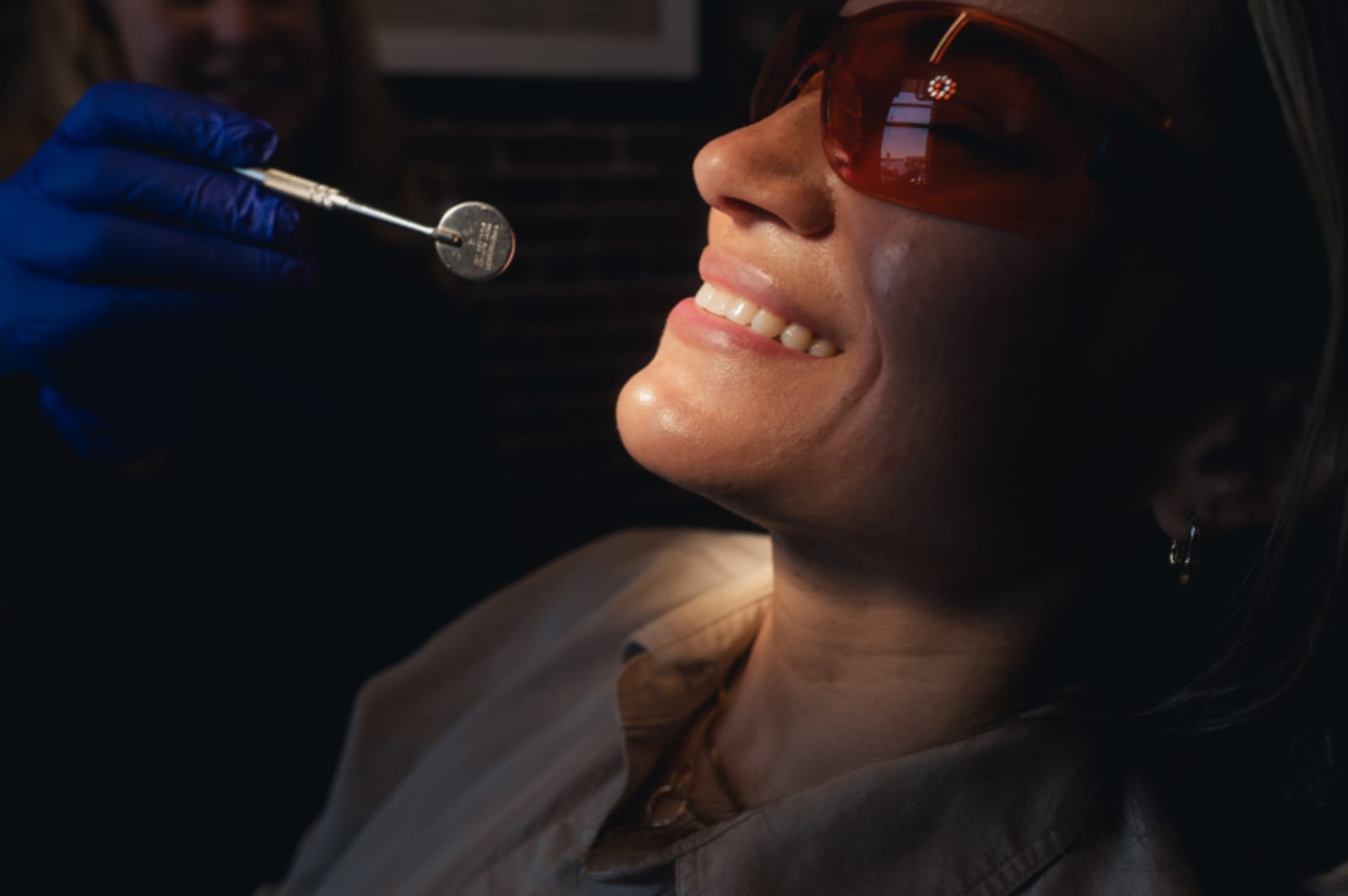
Every patient relationship begins the same way at our practice: with a comprehensive evaluation. This is where we build a complete picture before a single treatment gets discussed. It's not a formality, it's what makes everything that follows more accurate and more useful to you.
- You do most of the talking first. We ask what brought you in, what's worried you, and what you're hoping for, and we listen before anything else.
- We examine thoroughly. A careful clinical exam, a review of your dental and health history, and diagnostic records help us understand what's actually happening, not just what's visible at a glance.
- Technology sharpens the picture. Cone beam imaging, digital scanners, and microscopes let us see detail that guides more precise decisions.
- We talk through your options together, so you'll understand your diagnosis and every reasonable path forward before any work begins.
- We plan the whole case, not the pieces. When several concerns overlap, we address them as one connected plan rather than isolated problems.
The pace here reflects a simple belief: you deserve enough time to ask questions and feel confident in the direction you're choosing.
What You Gain from Specialist Restorative Care At Lewis Wharf Dental
Choosing a prosthodontist for complex work is about what that background means when your case is being planned:
- Restorations built to last. Careful attention to your bite, materials, and bone structure helps the work perform better over years, not just weeks.
- Function you can rely on. Teeth that chew, speak, and feel the way you expect them to, because the biomechanics were considered from the start.
- A natural-looking result. Aesthetics matter, and they're balanced against long-term health rather than treated as a quick surface fix.
- Coordinated complex care. When bone loss, gum health, and missing teeth all factor in, the plan accounts for the full picture.
- Fewer surprises. Thorough diagnosis up front means fewer things going wrong later, and clearer expectations along the way.
Dr. Rasool works alongside a multi-specialty team, including Dr. Neda, Dr. Nagai, and periodontist Dr. Crohin, so cases that need more than one discipline stay under one roof and one connected plan.
What Harvard Training and a Teaching Career Actually Mean When It Comes to Your Care
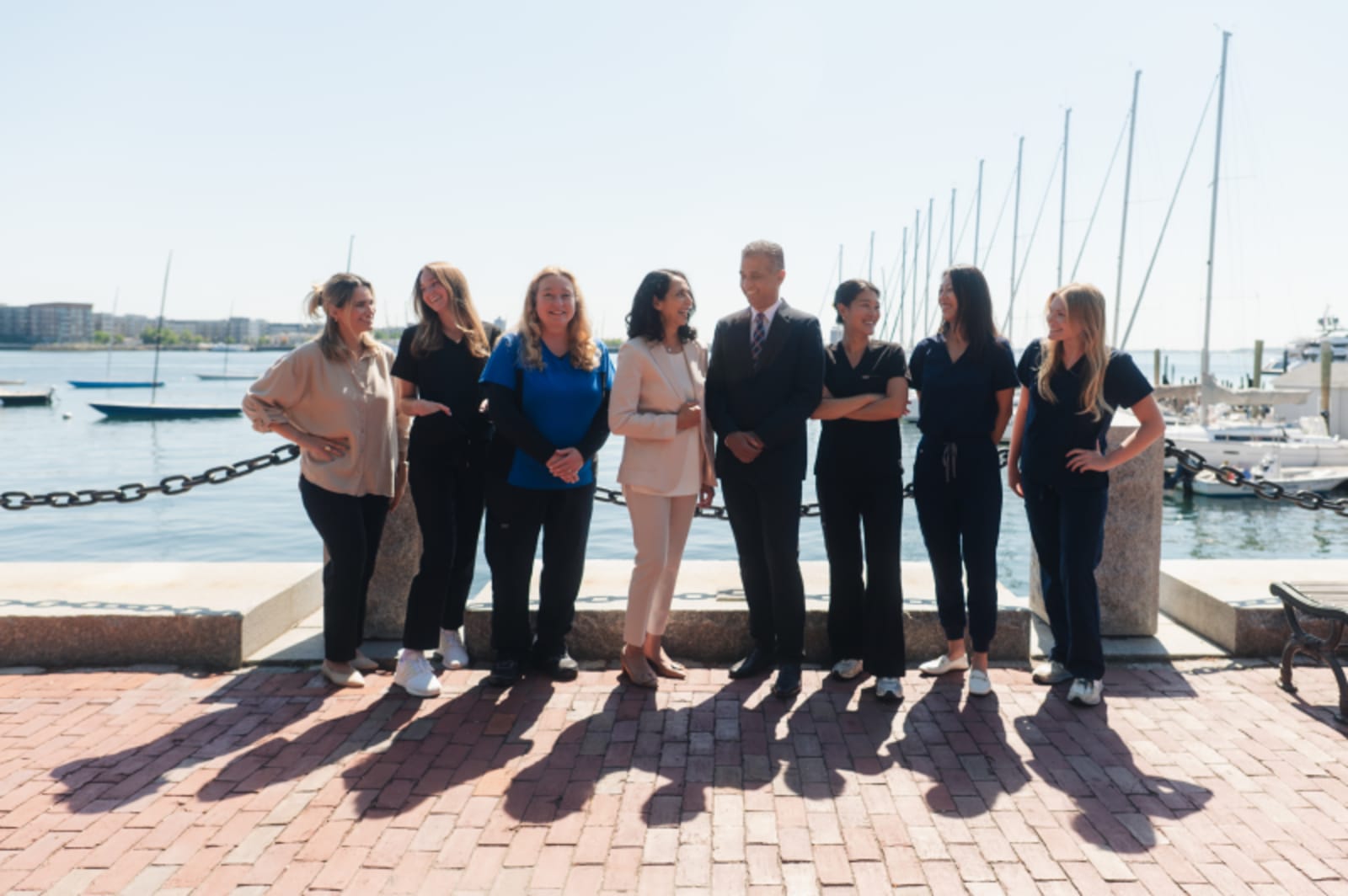
It's fair to ask what all the credentials add up to in the room where your case gets decided.
The residency. After dental school, a prosthodontist completes an additional multi-year residency focused entirely on restoring and replacing teeth. General dental education becomes the foundation, not the finish line. Those years are spent working through difficult cases, studying bite and occlusion in real depth, and developing judgment that only comes from concentrated, supervised clinical volume — the kind of judgment that shows up when your case is being planned, not just executed.
The faculty career. For Dr. Rasool, 12 years as full-time faculty at Harvard School of Dental Medicine meant staying current with new research, defending clinical decisions in front of peers and residents, and remaining accountable to a professional community that doesn't reward coasting. It's not an honorary title. In everyday terms, it shows up as treatment planning grounded in evidence rather than habit, and diagnostic attention that layered cases genuinely need.
Cost, Insurance, and Financing
Specialist dental care is an investment, and it's reasonable to want a clear sense of it before you commit. Fees vary with the complexity of your case, the materials chosen, and the scope of the work. Before any treatment, we'll give you an estimate and answer all your questions, so the numbers reflect your actual situation rather than a guess.
On coverage: we accept Blue Cross & Blue Shield as well as Delta Premier. We'll submit your claims and work with you to help you get the most from your plan. When financing makes sense, we offer a variety of convenient payment options, including CareCredit.
If you have questions about coverage before scheduling, our front desk is glad to help you think it through.
Frequently Asked Questions
How do I know if I need a prosthodontist instead of a general dentist?
A prosthodontist is the right fit when your situation involves missing teeth, significant restoration work, implants, or complex bite issues that need a higher level of planning. If a general dentist has referred you out, or you simply want a specialist managing this kind of work from the start, that's a sound choice. You can learn more about our multi-specialty team here.
What does prosthodontic specialty training involve beyond dental school?
In short, it's several years of residency focused entirely on restoring and replacing teeth (we cover what that means for your care in more detail above). In practice, it shows up as treatment planning grounded in evidence and the kind of diagnostic attention that layered cases genuinely need.
Is it worth paying more for a prosthodontist for crowns or complex restorations?
For a single straightforward crown, a good general dentist may be all you need. When the case is complex, involves your bite, or has to hold up as part of a larger plan, specialist-level judgment tends to pay off in restorations that last and fewer redo visits down the road.
What does dental implant cost look like with a prosthodontist versus an oral surgeon?
Cost depends on your specific case rather than the type of provider alone, and it's reviewed thoroughly at your evaluation. What a prosthodontist brings is planning the whole restoration, not just placing the implant, so the final teeth are designed with your bite and long-term function in mind. We'll walk you through the full estimate before anything begins.
Can a prosthodontist also handle my routine dental care?
Yes. Many patients trust us with both their specialty needs and their ongoing preventive care. Having one consistent team who knows your full dental history is something people find genuinely reassuring. If you're ready to get started, new patients are always welcome.
Do you offer second opinions on complex dental work?
We do. If you've been given a complicated treatment plan and want a careful second look before deciding, bring what you have and we'll review it with you honestly. Feel free to reach out to our Boston team to arrange a visit.
When You're Ready, We're Here
If you've done your research and you're ready to talk through your options, a comprehensive evaluation is the right place to start. We'll take a thorough look at where things stand and have an honest conversation about what's genuinely possible for you, at your pace.
You can reach us at (617) 227-4831 or through our contact page to schedule.
We're at 28 Atlantic Avenue on Lewis Wharf, on the Boston waterfront, open Monday through Thursday, 8:00 a.m. to 5:00 p.m., and we welcome patients from across the greater Boston area. If you'd like to learn more about our practice and providers, visit our home page.